Bedding Guide
Building a Breathable Bedding Setup Around an Organic Mattress
An organic mattress is only the beginning of a comfortable sleep surface. Sheets, mattress protectors, pads, toppers, and even the bed base influence how air moves, how moisture is managed, and what the bed feels like through the night. A thoughtfully chosen combination can help preserve the mattress and create a sleep environment that suits your preferences—without piling on layers that work against one another.
Published November 9, 2026
Think of the bed as a system
A bed is not a single material but a small landscape of materials, each touching or supporting the next. The mattress provides the main foundation. Above it, a protector may guard against spills and everyday wear; a pad or topper can alter the feel; sheets and blankets form the closest layer to the body. Beneath the mattress, a suitable foundation can affect support and airflow. Each choice changes the conditions around the others.
That matters because comfort is not determined by a label such as “organic” or “natural” alone. A breathable fiber can still feel warm when it is densely packed, covered by a tightly woven barrier, or layered under heavy bedding. Conversely, a lighter setup with modest cushioning may feel airy while providing too little protection or support for a particular sleeper. Construction, fit, thickness, and care are as important as the names of the fibers.
Start with the qualities you want to improve. Do you wake feeling clammy? Is the mattress surface too firm, or do you mainly want to protect it? Does the fitted sheet pop off because the mattress is deep? A clear goal helps avoid adding layers simply because they are marketed as an upgrade. The most breathable arrangement is often the simplest one that does the job.
Begin with the mattress and its surroundings
Mattresses vary in their construction and in how they respond to warmth, pressure, and moisture. Latex, wool, cotton, and other materials each have distinctive structures, but no material guarantees a particular sleep temperature for every person. Room temperature, humidity, pajamas, blankets, individual physiology, and the mattress design all contribute to how warm a bed feels.
Some mattresses incorporate wool as a cushioning or regulating layer. Wool fibers can absorb water vapor and hold air within their structure, properties that influence the way a bedding assembly handles moisture and warmth. A wool layer does not actively cool the body, nor can it compensate for a hot room or overly heavy duvet. Its effect depends on its quantity, placement, surrounding fabrics, and the sleeper’s experience.
For example, the Natural Wool & Latex Mattress combines a Dunlop latex core, wool, and an organic cotton canvas cover. Its listed care guidance is spot cleaning, and its description recommends a breathable support surface. Those details illustrate why evaluating the whole construction matters: material composition, cleaning limitations, and foundation requirements are all part of deciding whether a mattress suits a bedroom and household.
Before adding a topper or protector, consult the mattress manufacturer’s care instructions and warranty terms. Certain cleaners, moisture exposure, or unsuitable support systems can affect a mattress even when its surface layers seem harmless. Check whether the mattress needs a slatted base, a solid platform, or another specified foundation, and make sure the support is appropriate for its construction. Keep the underside adequately ventilated according to the maker’s guidance, particularly in humid rooms.
Choose fibers for function, not just reputation
Natural fibers are often chosen for their feel, origin, or preference for fewer synthetic materials. They also differ in texture, absorbency, weight, weave, and care needs. “Natural” describes a broad category, not a guarantee of breathability, low maintenance, or suitability for sensitive skin. Look at the finished fabric and its construction, not simply the fiber named on the label.
Cotton: familiar, adaptable, and varied
Cotton sheets are available in many weaves and weights. A crisp percale tends to feel different from a smooth sateen, even when both are made of cotton. Fiber quality, yarn size, weave density, and finishing all contribute to the result. Lightweight cotton sheets may suit people who prefer a less enclosed feel, while heavier or tightly woven versions can feel more substantial. Neither weave is universally best: personal preference and the rest of the bedding matter.
Organic certification can provide information about how a material was produced and processed under a particular standard. It does not, by itself, tell you whether a sheet will feel cool, how long it will last, or how well it will fit your mattress. Check the product’s specific certification, fabric composition, washing instructions, and dimensions.
Wool: useful moisture and temperature behavior, with care trade-offs
Wool is valued in bedding for its spring, insulating structure, and ability to take up moisture vapor. That can help a layer feel more comfortable across changing conditions, but “temperature regulating” should not be read as a promise that every sleeper will stay cool. Wool bedding may have a distinct natural scent when new, and some pieces need airing or spot cleaning rather than routine machine washing. Others are designed to be washable. The care label, rather than a general rule about wool, should guide maintenance.
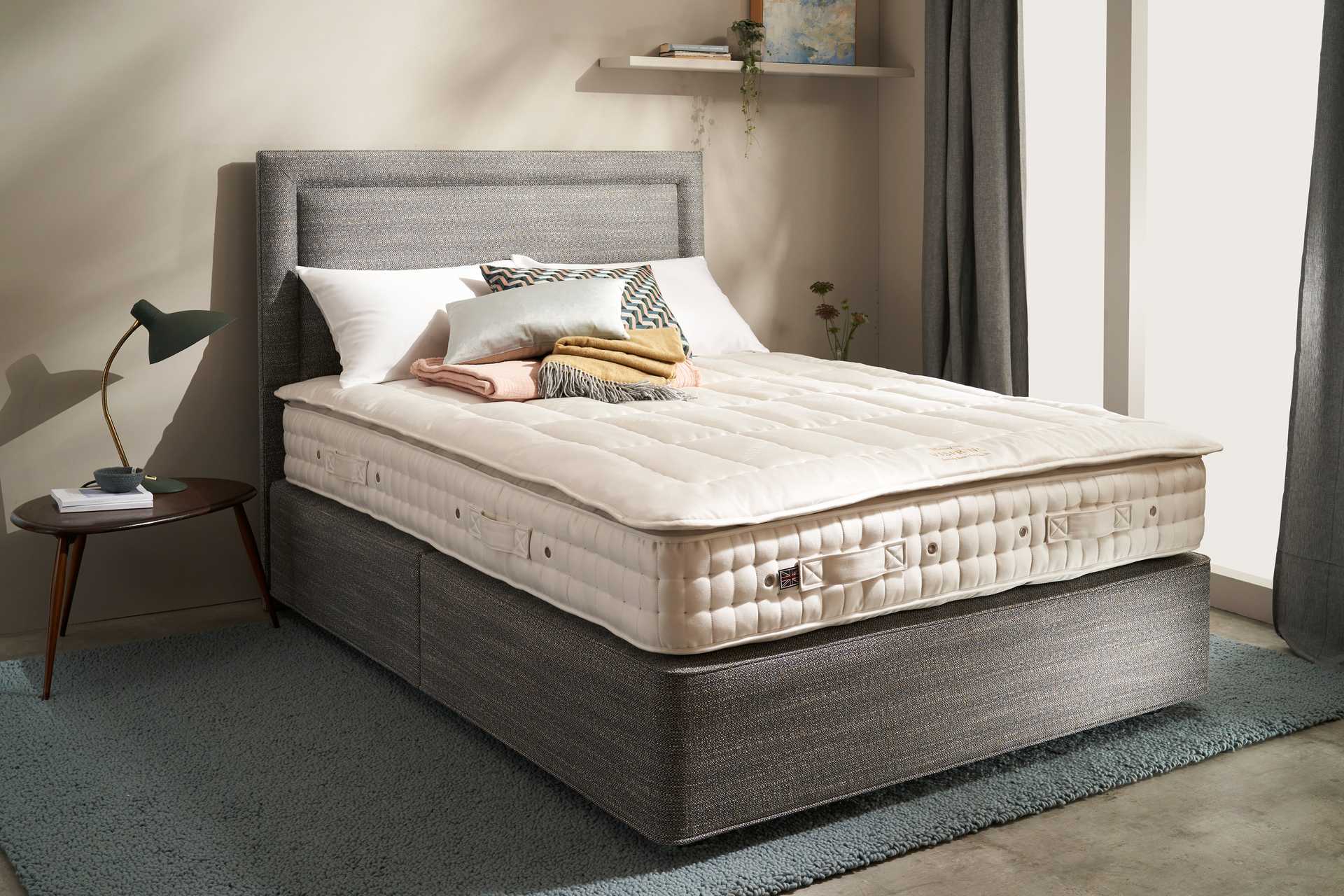
A wool topper can add cushioning as well as a different surface feel. The Vispring Opulence Mattress Topper, for instance, is described as a 3.1-inch layer containing British wool and silk, held in place with straps. Its substantial height means it is not a mere protective sheet: it changes the feel and profile of the bed. Compare its dimensions and care instructions with your mattress and fitted sheets before choosing a topper of this type.
Other fibers and blended constructions
Silk, linen, and blends can also be used in bedding. Their performance depends on the finished textile and how it is layered. Linen often has a more textured hand; silk is smooth and lightweight; blended fabrics can combine qualities or improve durability. A waterproof membrane, quilting, backing fabric, or dense filling can have as much influence on airflow and feel as the headline fiber.
When comparing options, ask what each layer is meant to do. A sheet is principally the washable surface next to the body. A protector is intended to reduce the risk of stains or liquid reaching the mattress. A pad may add modest cushioning. A topper generally makes a more noticeable change to surface comfort. Product naming is not perfectly consistent across the industry, so examine construction and function rather than relying on the title alone.
Build the layers from the mattress upward
There is no single correct stack for every bed. A useful starting point is to keep the number of layers low and add only what solves a specific need. This makes it easier to identify what is helping, what is trapping heat, and what needs special care.
- Foundation: Use a base that meets the mattress maker’s support and ventilation requirements. A breathable mattress cannot perform as intended if placed on an incompatible foundation.
- Mattress: Confirm the size, construction, and care limits. Allow a new mattress to air according to its instructions before making the bed, and avoid introducing moisture during setup.
- Protector, if needed: Choose protection based on likely risks. A breathable fabric protector may provide a different feel from a waterproof version. If waterproofing is essential, review the membrane, noise, care, and fit rather than assuming all protectors behave alike.
- Pad or topper, if useful: Add cushioning only if you want to change the surface feel. Check whether it is washable or spot-clean only, whether it is secured with straps or a skirt, and whether it changes the mattress height.
- Fitted sheet: Match its pocket depth to the total height of the mattress and any layers beneath it. A sheet that is too shallow can pull loose; one that is excessively deep may bunch.
- Blankets and duvet: Adjust these separately from the mattress layers. If the bed feels too warm, a lighter top covering may be a more direct change than replacing a mattress protector.
For many people, a mattress, well-fitting protector, and sheet are enough. If the mattress itself has a comfortable surface, a thick topper may add unnecessary warmth, cost, and bulk. If it feels too firm, a topper could be a reasonable way to alter cushioning, but thickness and material will influence the result. A topper also cannot correct a mattress that is worn out, unsuitable for the sleeper’s needs, or improperly supported.
Fit is part of breathability
Fit may seem like a matter of convenience, but it affects how a bedding setup functions. A protector that shifts can expose parts of the mattress. A sheet stretched too tightly may compress a lofty pad or come loose at the corners. A bulky stack may exceed the depth of a fitted sheet, creating tension and uneven folds. Those issues can disrupt sleep and make routine care harder.
Measure the mattress rather than relying only on a size name. Record its length and width, then measure its depth from the bottom edge to the top surface. If adding a pad or topper, include its height when choosing a fitted sheet. Manufacturers sometimes state that a skirt or pocket fits a range of depths; check the stated range against the complete bed, not just the mattress alone.
Consider how a layer is anchored. Elastic corners, a fitted skirt, or straps may each suit different constructions. Corner straps can be useful for a flat pad that otherwise slides, while a fitted protector may offer more complete coverage. Secure layers without stretching them beyond their intended fit. After making the bed, smooth out folds that could cause uncomfortable ridges beneath the sheet.
Layer thickness changes the bed’s overall height, too. This affects the fitted sheet, the visual and physical height of the mattress, and sometimes the ease of getting in and out of bed. It can also change the way a pillow feels in relation to the shoulder and neck. If you add a high topper, reassess the sheet and bedding proportions rather than assuming the existing setup will still fit.
Protection and airflow are a balancing act
A protector can help guard a mattress against perspiration, spills, dust, and ordinary wear, but protection varies. A fabric-only layer is not necessarily waterproof. A waterproof layer may have a membrane that blocks liquid while allowing some vapor to pass, but the result depends on its design. Multiple backing layers, quilting, and close-fitting fabrics can all affect the hand and airflow of the assembled bed.
Think about the level of protection you genuinely need. In a household where accidental spills are common, waterproofing may be a practical priority. Someone mainly seeking a washable barrier from skin oils and everyday dust may prefer a lighter protector. For a child’s bed or a mattress with specific hygiene requirements, manufacturer guidance and applicable safety information should take precedence over a general bedding recommendation.
When a bed feels hot, do not immediately assume the mattress is responsible. Try isolating variables: use the same sheets and blankets while changing only one layer, or temporarily remove a topper if care instructions permit. Notice whether the sensation is warmth, clamminess, or a damp surface; these can point to different causes. Room humidity, ventilation, sleepwear, and duvet weight may matter as much as the mattress cover.
Care keeps materials working as intended
Breathable bedding still needs regular care. Dust, oils, and moisture accumulate over time, and a layer that is difficult to clean may be a poor fit for a household’s needs. Before buying, check how the complete item is maintained: the cover may be washable while its filling is not, or the entire item may require airing and spot cleaning. Never assume that a wool product can go in a washing machine simply because another wool item can.
- Follow the label: Use the stated water temperature, cycle, detergent guidance, and drying method. Heat and agitation can shrink or distort some fibers and constructions.
- Air bedding when appropriate: Removing sheets and allowing layers to air can help disperse accumulated moisture. Follow product-specific instructions, and avoid prolonged exposure to direct sun or heat if the maker advises against it.
- Act promptly on spills: Blot rather than rub where appropriate, and use only cleaning methods permitted for the material. Keep moisture from soaking into a mattress, especially if its care instructions prohibit wet cleaning.
- Wash removable covers separately: If a pillow, protector, or topper has a washable cover and a non-washable core, remove and clean only the part identified as washable.
- Let items dry completely: Reassembling or remaking a bed while a washable layer is damp can trap moisture. Allow sufficient drying time according to the label.
Care is also part of longevity. A topper that is turned, aired, or cleaned as instructed may remain more comfortable than one left compressed or damp. But turning and rotating are not universal rules: some mattresses and toppers are designed for one orientation. Check the product instructions before changing how it is positioned.
Sensitivity, allergies, and expectations
People choose natural sleep materials for many reasons, including texture, sourcing, or a preference for particular fibers. Yet “hypoallergenic” is not a guarantee that no individual will react. Sensitivity can involve a fiber, dust, detergent residue, finishing substances, or other parts of the sleep environment. If you have a known allergy or skin condition, review the full material list and seek advice from an appropriately qualified health professional when needed.
Organic certification can help document specified production standards, but it does not establish a medical benefit or ensure that a product is right for every sleeper. Likewise, a claim about moisture management should not be interpreted as treatment for sweating or a health condition. Bedding choices can make the surface more comfortable, but they are not a substitute for medical advice.
Wool can be a practical option for some sleepers, but it has trade-offs: it may feel warmer or firmer than expected, may have a natural odor initially, and can require careful cleaning. Cotton can feel familiar and easy to launder, but dense quilting or a heavy construction may not suit everyone. The best choice is a combination of material, weave, thickness, and maintenance that works in the actual bedroom.
A measured way to fine-tune the bed
Instead of changing several layers at once, treat bedding adjustments like a small experiment. First, establish a baseline: note the room temperature, sheets, duvet, and any protector or topper. If you wake hot or damp, change one factor at a time for several nights where practical. A lighter duvet, a different sheet weave, or the removal of a nonessential layer may reveal more than a wholesale replacement.
Give a new layer enough time to show how it feels in ordinary use, while respecting return policies and hygiene requirements. Pay attention to pressure and support as well as temperature. A thin protector may preserve the original feel of the mattress; a lofty topper may make the surface softer but also raise the bed and retain more warmth. These effects are personal, so product descriptions should be treated as starting points rather than guarantees.
Keep a short list of what changed and what you noticed. Did the surface feel less clammy? Did the fitted sheet stay in place? Was the topper comfortable when sleeping on your side and back? Could you clean it without excessive effort? These practical observations often matter more than broad claims about a fiber being naturally superior.
A simple checklist before you buy
- What problem should this layer solve: protection, cushioning, warmth, or a different surface feel?
- What are the complete materials, including cover, filling, backing, and any waterproof membrane?
- How does the construction affect thickness, airflow, and the feel of the finished bed?
- Will it fit the mattress dimensions and depth, including any other layers?
- Can it be machine washed, spot cleaned, aired, or only professionally cleaned?
- Does the mattress maker allow this type of protector or topper, and will the bed base meet its requirements?
- Does a certification or performance claim apply to the specific material and product being considered?
These questions create a more useful comparison than simply sorting bedding into “natural” and “synthetic.” Two products made from the same fiber can differ substantially in density, quilting, finishing, fit, and maintenance. A well-chosen layer is one whose function is clear and whose care and construction make sense for the way the bed is used.
Frequently asked questions
Does an organic mattress automatically sleep cool?
No. “Organic” describes aspects of materials or production under a relevant standard; it does not predict an individual’s sleep temperature. Mattress construction, bedding layers, room conditions, clothing, and personal factors all contribute. Focus on the complete setup and make gradual adjustments if the bed feels too warm.
Is a mattress protector always necessary?
Not always, but it can help reduce exposure to spills, stains, and everyday wear. The right choice depends on the mattress maker’s instructions and your household’s needs. Compare breathability, protection level, noise, fit, and washing requirements before selecting one.
Will a wool topper make the bed cooler?
There is no universal answer. Wool’s fiber structure and moisture behavior may contribute to a more balanced-feeling surface for some sleepers, but a topper also adds material and insulation. Its thickness, quilting, cover, and the rest of the bedding influence the result. Consider the full construction and your own experience rather than relying on a single cooling claim.
How many layers should go on an organic mattress?
Use as few as necessary to provide the protection and comfort you want. A mattress, one appropriate protector, and a fitted sheet may be sufficient. Add a pad or topper only when you have a specific reason, and confirm that the additional height will still work with your sheets and bed frame.
Can I wash wool bedding in a machine?
Only when the care instructions for that exact item allow it. Some washable wool products are designed for machine care; others should be aired, spot cleaned, or professionally cleaned. Washing or drying by the wrong method can cause shrinkage, felting, or damage to the construction.
The comfort is in the combination
A breathable bedding setup is not a contest to use the most natural materials or the greatest number of layers. It is a considered arrangement: a mattress supported as directed, a protector chosen for real-world needs, a pad or topper added only when it improves comfort, and sheets and blankets that fit the season and the sleeper. Good fit and manageable care complete the picture.
Start with the mattress, learn what its materials and instructions require, then build upward one layer at a time. When each component has a clear purpose, it becomes easier to balance airflow, moisture, protection, and feel. The result is not a universal recipe, but a bed shaped around the quiet details of how you sleep.